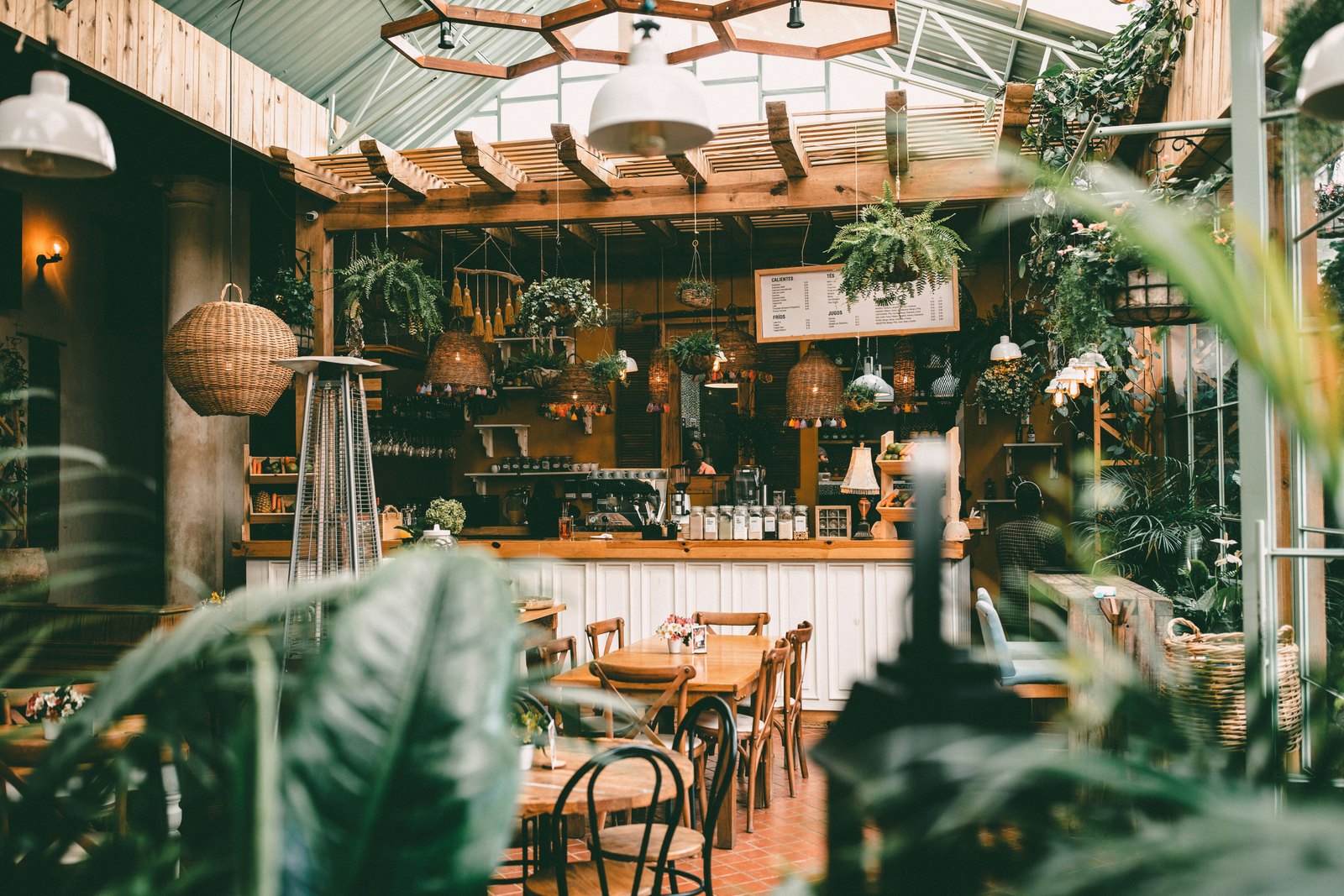
At 8:15 the queue is six deep and someone is asking whether the oat milk is barista-grade. At 11:40 that same room holds four people, three laptops, and one cortado bought ninety minutes ago. Same space, same speakers, completely different job to do.
Most cafes solve this with one playlist and hope. The result is music that's too sleepy for the rush and too busy for the writers — and a floor that either turns too slowly or empties too fast. Choosing coffee shop background music for working customers isn't really about finding "focus music." It's about designing a day that moves, so guests self-select their own timing without ever feeling pushed.
The two guests you're actually programming for
The morning rush guest is transactional and time-poor. They want energy, forward motion, and a sense that the room is competent. Music that drags makes a two-minute wait feel like five.
The laptop guest is the opposite. They want the room to disappear. They're not listening to your music; they're using it as a wall against other people's conversations. If it's too eventful — a vocal hook, a sudden dynamic jump, a track they recognise — they surface, get distracted, and eventually get annoyed.
Here's the tension: the laptop guest is also your best mid-morning revenue if managed well, and your worst if not. One coffee for three hours at a four-seat table on a Saturday is a problem. The same guest on a Tuesday at 10am, buying a second flat white and a pastry, is exactly who you want.
So the goal isn't to repel them. It's to make staying comfortable for the right length of time.
How music quietly moves people along
Dwell time responds to a handful of sonic levers. None of them work as a blunt instrument — turn any one up too far and you get complaints instead of turnover.
- Tempo drift. A gradual climb in BPM across 45–60 minutes reads as "the day is getting on." Nobody notices the change; everyone feels it.
- Vocal density. Instrumental and low-vocal music supports concentration. Reintroducing lyrics — especially familiar ones — makes the room feel more social and less like a library.
- Rhythmic definition. Ambient washes with no clear pulse encourage settling in. A crisp, defined groove creates gentle forward pressure.
- Track length and transitions. Long, slow-blending tracks feel timeless. Shorter tracks with visible changeovers create a sense of passing time.
- Loudness contour. A two-to-three decibel lift is enough to shift a room's posture without anyone reaching for the volume knob in their head.
The best turnover tool isn't a louder room. It's a room that feels like it's moving on to its next chapter — and invites the guest to do the same.
That's the key distinction. Aggressive tempo spikes and loud vocals will clear a room, but they also make guests feel evicted — and people remember that feeling far longer than they remember your espresso.
A day-part structure that serves both crowds
Think in four blocks rather than one playlist. The exact genres depend on your brand, but the shape holds across most cafes.
07:00–10:00 — Rush
Bright, mid-tempo, rhythmically clear. Enough energy to make the queue feel efficient and the staff feel supported behind the machine. Vocals are fine here; the room is loud anyway, and music has to compete with grinders and steam wands. This is also where crisp transitions matter — dead air between tracks during a rush makes the room feel like it's stalled.
10:00–12:00 — Focus window
Drop the density. Instrumental, downtempo, warm. This is where coffee shop background music for working customers earns its keep: the room becomes usable for two hours of real work, which is what turns a laptop guest into a regular rather than a one-off.
Keep it interesting enough for staff — a common failure is music so inert that your baristas hate their shift. Texture and musicality, not wallpaper.
12:00–14:00 — Lunch lift
Here's the pivot. Tempo climbs, vocals return, groove sharpens. The laptop guest who arrived at 10 typically starts packing up somewhere in this window — not because anyone asked, but because the room has changed character around them. They read it as "lunch is starting," which is true, and they leave feeling like they timed it well.
14:00–close — Afternoon and wind-down
Softer again mid-afternoon, then a considered build into evening if you trade later. If you serve wine or cocktails after 5, the shift in music should begin before the light changes, not after.
Where consumer playlists fall down
A Spotify playlist can be perfectly well-curated and still fail in a room, for three reasons.
First, it has no clock. It plays the same energy at 8am and 11am, so it can't do any of the work described above. Second, transitions are unmanaged — abrupt gaps and mismatched track endings break the spell in a quiet room, which is precisely when they're most noticeable. Third, it isn't licensed for commercial use, which is a separate and non-negotiable problem.
This is the gap SpinLoud is built to close. Channels are human-programmed rather than algorithmic, so day-part energy curves are intentional. SpnMix handles transitions so tracks flow rather than stop and start. SpnSound manages processing and loudness consistency, which matters enormously in a hard-surfaced cafe where one over-compressed track can spike the room. CherryPick lets you pull the specific tracks that fit your brand and exclude the ones that don't — useful if there's an artist your regulars have heard enough of.
And scheduling means you set the day's shape once. It runs the same way on a wet Tuesday when your best barista is off.
What to check this week
Stand in your own room at 10:30 with a coffee and no phone. Can you hear a clear pulse? Are there lyrics? Could you write an email here for ninety minutes?
Then come back at 12:15. If the room sounds identical, you've found your easiest available improvement — and it costs nothing but attention.
Music won't fix a slow till or a cramped floor plan. But it's one of the few levers that shapes how long people stay, how the queue feels, and whether your staff enjoy their shift — all at once, and all without a single sign on the wall asking anyone to please limit laptop use to one hour.